
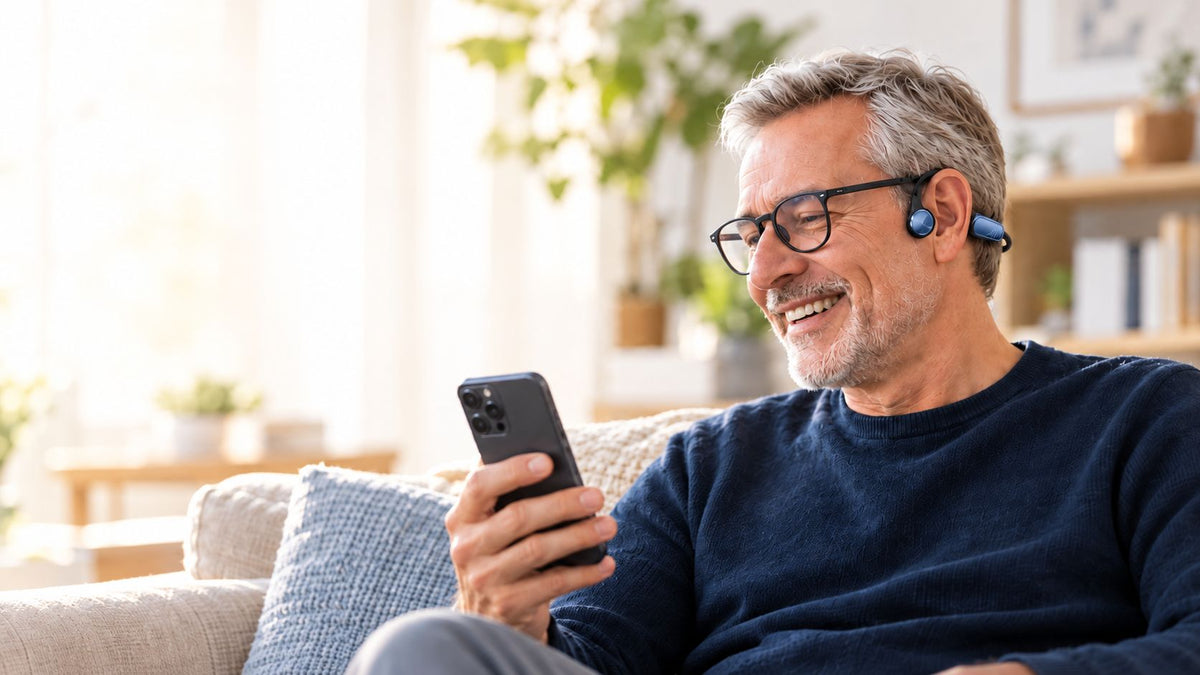
Bluetooth hearing aids combine hearing support with wireless features for calls, music, or app-based adjustments. They can make familiar moments easier to enjoy, from catching up with family to listening to a favorite audiobook.
Perhaps you want to hear a caller while looking at the photos they have sent. Or you would like to follow a recipe video without turning up the kitchen speaker. These everyday preferences can help you choose. A suitable device should meet your hearing needs, connect with the equipment you use, and feel comfortable throughout those moments.
Planning to buy this Black Friday? Mearsun’s Z01 and OW17 offers run from October 27 through December 1, 2026, with 60-day price protection. The guide below can help you decide which features and wearing style fit your daily needs.
What Are Bluetooth Hearing Aids?
Bluetooth hearing aids are hearing devices that use Bluetooth to communicate with compatible phones or other equipment. Their hearing functions process sounds around you, while their wireless connection can carry audio or control settings.
Those functions serve different purposes. During a conversation across the table, the device handles nearby sound. When you play a recording from your phone, a supported Bluetooth audio connection delivers that recording to the device.

The exact combination varies. Some models offer phone calls and music playback, while others use a wireless connection mainly for app controls.
Hearing Aids, Bluetooth Features, and Earbuds
These device categories have different purposes, even when they look similar:
|
Device Type |
Main Purpose |
What the Connection Adds |
|
Hearing aids without Bluetooth |
Hearing support for sounds around you |
No Bluetooth connection; other controls and accessories vary by model |
|
Bluetooth hearing aids |
Hearing support with wireless connectivity |
Calls, media streaming, app adjustments, or a combination |
|
Regular Bluetooth earbuds |
Phone calls and media playback |
Wireless audio; any hearing-aid function must be specifically supported |
Bluetooth Hearing Aids vs. Hearing Aids Without Bluetooth
Both types can provide hearing support. Bluetooth adds ways to connect with your everyday electronics.
A hearing aid without Bluetooth may still offer adjustable sound, listening programs, or other assistive features. Its suitability depends on your hearing needs and how well the device addresses them. Wireless connectivity adds convenience for activities involving a phone or another audio source.
Consider a call from a family member. With a hearing aid that supports phone audio streaming, their voice can play through your hearing device. You can keep using the device you already wear instead of finding a separate pair of headphones.
Bluetooth Hearing Aids vs. Regular Bluetooth Earbuds
Regular Bluetooth earbuds primarily reproduce audio from your phone. Hearing aids provide assistance for hearing loss, with sound processing and adjustment suited to that purpose.
The National Institute on Deafness and Other Communication Disorders explains that digital hearing aids can adjust amplification across different sound frequencies. That allows hearing support to address more than overall loudness. See the NIDCD’s Hearing Aids guide.
This distinction helps answer a common question: “Could I just use my earbuds?” Ordinary music earbuds are not interchangeable with a hearing aid. Some consumer audio devices offer specific hearing-assistance features, but their intended use and eligibility need separate consideration.
A device can also combine hearing assistance and earphone functions. Mearsun OW17, for example, offers hearing support alongside Bluetooth calls and music playback. Its hearing and Bluetooth audio functions address different moments in the same day.
How Can Bluetooth Hearing Aids Help in Daily Life?
Bluetooth hearing aids with audio streaming let you take calls and enjoy media through the device you use for hearing support. Their value often shows up in small moments: a longer conversation with your daughter, a recipe you can follow, or an audiobook you look forward to.
You may use some features every day and others only occasionally. Thinking about those familiar moments helps you see which connections would make a useful addition to your routine.

Phone Calls Without Changing Devices
A compatible connection sends the caller’s voice to your hearing aids, so you can keep wearing them when the phone rings. With hands-free calling, the hearing device also picks up your voice. Other setups use the phone’s microphone for your reply.
Imagine speaking with your daughter while looking at the photos she has just sent. With a supported hands-free setup, you can leave the screen in view and keep talking about the people and places in each picture. You have more freedom to enjoy the conversation without holding the phone near your mouth.
Apple’s List of Made for iPhone Hearing Devices identifies models with bidirectional streaming for hands-free conversations. The connected Apple device must also meet the system requirements.
If family calls are a regular part of your week, the microphone arrangement deserves attention. It affects how comfortably you can talk while viewing a message, making a note, or setting the phone down beside you.

Music, Podcasts, and Videos
Hearing aids with Bluetooth audio streaming can play supported media from a compatible phone or tablet. A podcast, an audiobook, or a video message reaches your hearing device without relying on the phone’s loudspeaker.
Picture following a cooking video on a tablet at the kitchen counter. The screen stays where you can see the next step, while the audio plays through your hearing device. You can pause to stir the pan, then return to the instructions. The same convenience can help you enjoy a language lesson or a recorded message from a friend.
Sound preferences still matter. The settings you use for conversation may feel different when listening to music. A short session with a familiar song can help you judge the balance of voices, instruments, and overall volume.
Choose something you already enjoy listening to. You are more likely to notice whether a voice feels comfortable to follow or a favorite melody sounds balanced. A longer podcast can also help you assess how the device feels while you sit, move your head, or wear your glasses.

TV Listening Together
A compatible TV connection can send television audio to your hearing devices. Depending on the equipment, this may use a direct wireless connection or a dedicated transmitter.
Imagine settling down to watch a favorite series with your partner. You want to follow the dialogue, while they prefer the room volume at a comfortable level. A supported setup may let you adjust your own listening level while the TV speakers remain available for them.
That shared experience depends on the television’s audio-output options and the hearing device’s connection method. Some setups keep the speakers active; others switch outputs when another device connects. Establishing that detail helps you choose a setup that suits both listeners.
Watching the same series on a phone or tablet uses a different connection. If the living-room television is where you spend most of your viewing time, its compatibility deserves attention alongside your phone.
How Do You Choose Bluetooth Hearing Aids for Your Needs?
Start with your hearing needs, then consider when you will use calls, music, and on-device controls. The best Bluetooth hearing aids for you should fit those activities and feel manageable without adding unnecessary steps to your day.
Your Hearing Needs
Start with the hearing support you need in everyday life. You may struggle to follow conversations at dinner, hear softer voices, or understand speech when several people are talking. An audiologist can assess the type and degree of your hearing loss and help you identify suitable device options.
Once you understand those needs, you can compare Bluetooth features around the calls, music, and other activities you enjoy. Hearing suitability comes first; wireless features add convenience to the device you choose.
Compatibility With Your Phone
Compatibility depends on your phone model, operating system, hearing device, and intended function. App adjustments, audio streaming, and hands-free calling can have different requirements.
A useful question is, “Can this device handle calls and podcasts on my phone?” Google’s Connect Hearing Devices to Your Android Device explains supported connection routes. The model’s compatibility information should cover the functions you plan to use.
Battery Life and Controls
Compare battery figures for your usual activity, because hearing assistance and music playback can have different runtimes. Charging-case capacity describes additional recharges rather than uninterrupted wearing time.
Controls affect daily convenience too. You may prefer physical buttons you can reach without opening an app, or welcome additional sound adjustments on your phone. That preference provides a useful starting point when comparing Mearsun Z01 and OW17.
During Mearsun’s Black Friday event, Z01 is $249.99 and OW17 is $299.99, with 60-day price protection, from October 27 through December 1, 2026. Z01 for a behind-the-head design with physical controls, or OW17 for a clip-on fit with touch controls, optional app adjustment, and a charging case.
Mearsun Z01 for Direct Adjustments Without an App
Consider the Mearsun Z01 Open-Ear Bone Conduction Hearing Aid if you prefer a behind-the-head fit and physical controls. Its hearing assistance works without a phone, so you can adjust settings directly while sitting with family or moving between rooms.
In hearing-assistance mode, four listening modes and five volume levels per side give you control over your preferred balance. You can adjust each side separately without navigating an app.

A compatible phone connection adds hands-free calls and music. During Bluetooth audio, the right-side buttons control volume. Z01 therefore suits a preference for direct operation, with phone audio available when you want it.
Mearsun OW17 for a Clip-On Fit and Optional App Adjustment
The Mearsun OW17 Clip-On Bone & Air Conduction Hearing Aid offers a different routine: touch controls for basic use, optional app-based sound adjustment, and a portable charging case.
Consider OW17 if you prefer separate clip-on devices and like having additional settings available on your phone. You can use its basic hearing controls without opening the app, then access further adjustments when you want them.

Bluetooth supports calls and media, while hearing support and Bluetooth audio operate as separate usage modes. The case gives you a place to store and recharge the devices between sessions, which may suit days spent moving between home and other places.
Choosing Between Z01 and OW17
Picture how you would make an adjustment during an ordinary day. If you prefer reaching for physical buttons and keeping your phone out of the process, Z01 is the stronger match for that preference. Its behind-the-head format also gives you a single device to put on.
If you prefer a clip-on format, touch controls, and the option to personalize settings through an app, OW17 offers that combination. Its charging case may fit naturally into a routine where you remove and recharge the devices between activities.
Both bring hearing support and Bluetooth audio into one product. The choice comes down to which wearing style, controls, and charging arrangement you would feel comfortable using regularly, alongside suitability for your hearing needs.
Conclusion
Bluetooth hearing aids can make familiar activities easier to enjoy, from looking through family photos during a call to following an audiobook at the end of the day. A suitable choice brings those connections together with hearing support, comfortable wear, and controls you feel confident using.
For Mearsun, the choice is practical. Z01 offers a behind-the-head design with physical controls and independent left/right adjustment in hearing mode. OW17 offers a clip-on fit, touch controls, optional app adjustment, and a portable charging case. Once your hearing needs are understood, explore the Mearsun hearing aid to find the approach that fits your daily routine.
If one of these designs fits your needs, Mearsun’s Black Friday offers run through December 1, 2026: Z01 at $249.99 and OW17 at $299.99, both with 60-day price protection.
Frequently Asked Questions
Do Bluetooth Hearing Aids Need Wi-Fi?
No. The Bluetooth audio link works without Wi-Fi, so you can listen to downloaded audio from a compatible paired device offline. Online music services, app downloads, and some support features need a separate internet connection.
How Far Can I Move Away From My Phone?
The usable distance depends on both devices and your surroundings. Walls, interference, and other obstacles can interrupt audio before you reach a device’s advertised maximum range. Keeping the phone nearby is more dependable than expecting the same range in every room.
Can I Hear People Around Me While Streaming?
That depends on how the hearing device handles environmental sound during playback. Some models provide ambient-microphone adjustments, while others use separate hearing and audio modes. Open-ear fit alone does not confirm that amplified hearing support remains active during streaming.
Share:
Black Friday Hearing Aid Deals 2026: Discover Mearsun Z01 and OW17